Lesson 6 of 7 · 10 min
Build Your Personal AI Playbook
The goal is not to use AI everywhere. It is to recognize a few moments where AI helps, use it deliberately, and keep what works.
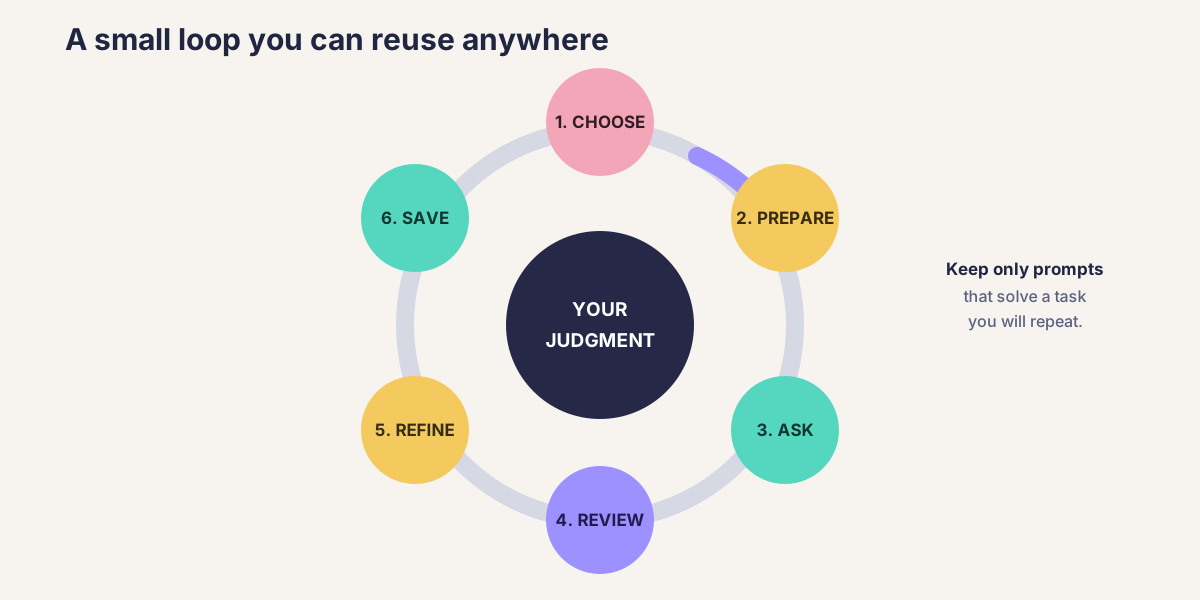
Your six-step loop
- Choose: Pick a small task where a draft, explanation, or structure would help.
- Prepare: Remove information that should not enter the tool.
- Ask: Use Goal + Context + Constraints + Output.
- Review: Check facts, assumptions, tone, and missing context.
- Refine: Ask a follow-up or edit the result yourself.
- Save: Keep the prompt only if it solved a task you expect to repeat.
This loop works across tools because it is based on your thinking, not a product feature.
Build a small library
Three reliable prompts are more valuable than a folder of prompts you never use. Start with one personal task, one communication task, and one organizing task.
Leave brackets in your template where details change:
Goal: Draft [type of message] for [audience]. Context: They need to know [facts]. Constraints: Use [tone], stay under [length], and do not [boundary]. Output: Return [format] with a clear next step.
When you reuse it, replace the brackets and remove anything irrelevant.
A final review habit
Before using an AI result, ask:
- Is it true?
- Is it appropriate for this person and situation?
- Does it sound like me?
- Is any important context missing?
- Am I comfortable being accountable for it?
If the last answer is no, do not send, publish, or act on it yet.
Put your playbook somewhere useful
Use the practice lab to assemble your starter playbook. Copy it somewhere you already keep useful notes. Over the next week, try one prompt on a real low-risk task and improve it once. Then continue to the final lesson for a few more playful ideas worth trying.
Build three prompts you will actually reuse
Choose a starting task for each part of your life. You will get a plain-text playbook to copy and personalize.
Choose one task in each section to assemble your playbook.