Lesson 2 of 7 · 10 min
Make Everyday Life Easier
The best personal uses of AI are often ordinary. They remove a blank page, organize scattered thoughts, or give you a starting point you can improve.
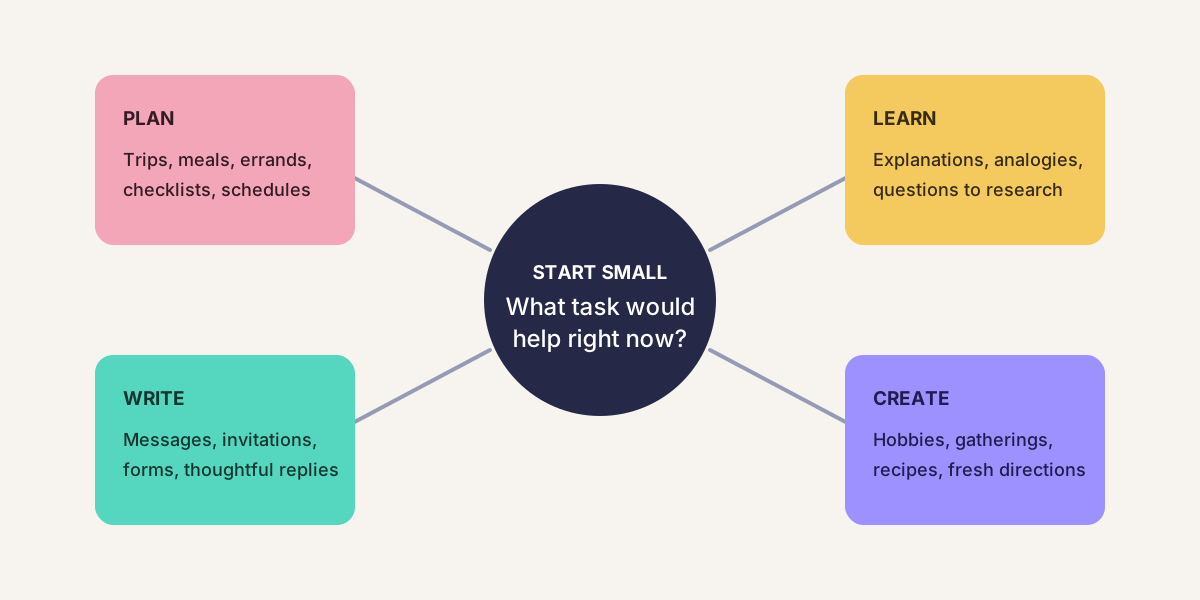
Plan
Ask for a realistic schedule, a meal plan, a packing checklist, or errands grouped by location. Include the time, budget, people, and preferences that shape the plan.
Try: “Create a two-hour Sunday reset plan for laundry, meal preparation, and reviewing the coming week. I want a calm pace and no task longer than 30 minutes. Return a timed checklist.”
Learn
AI can explain unfamiliar language, compare concepts, and help you form better questions. Tell it what you already know and how you learn best.
Try: “Explain how a home heat pump works to someone who understands a basic air conditioner. Use a simple analogy, define five important terms, and list questions to ask an installer.”
Do not assume every fact is correct. Ask for sources, then check the original source when accuracy matters.
Write
Use AI to draft invitations, thoughtful replies, forms, or difficult messages. Give it the facts and desired tone, then rewrite anything that does not sound like you.
Never paste passwords, financial account numbers, medical records, private family details, or someone else’s personal information into a public AI chat.
Create
AI is useful for generating options: a garden theme, recipe variations, hobby ideas, or activities for a gathering. Ask for several distinct directions and criteria for comparing them.
Your taste is the final filter. A polished suggestion is not automatically a good fit.
Before the next lesson
Pick one task from the practice lab. Copy the stronger prompt, replace its details with your own, and try it in an AI tool. Keep one sentence from the result that was genuinely useful.
Turn an everyday request into a useful prompt
Pick a situation, compare the two requests, then copy the stronger version to adapt.
Plan my weekend.